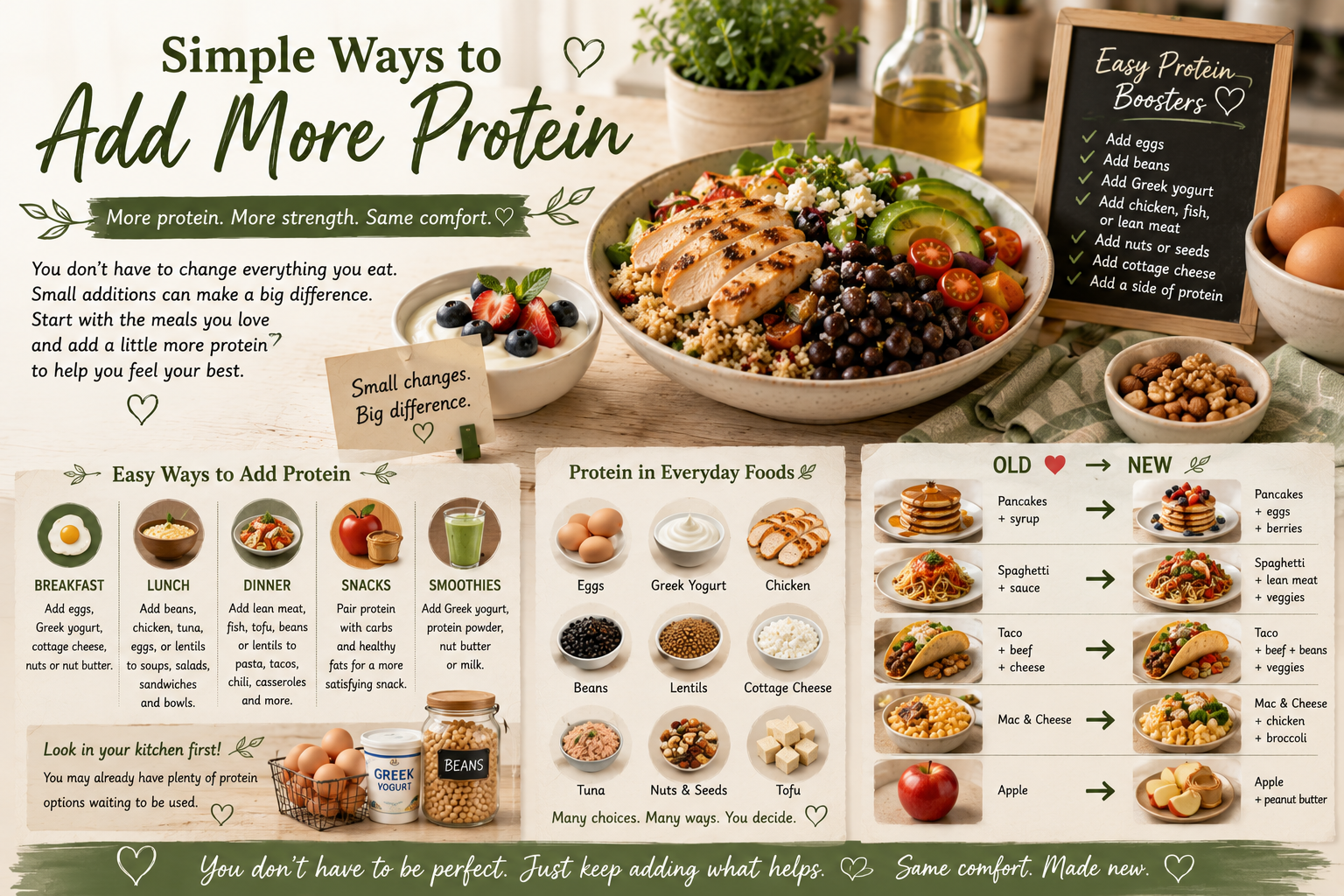
Simple Ways to Add More Protein
Protein is having a moment. Walk through almost any grocery store and you'll see it everywhere — high-protein cereal, protein bars, protein shakes, protein cookies, protein chips, protein pancakes. At this rate, we're about three weeks away from high-protein bottled water.
But here's the thing: adding more protein to your meals doesn't require replacing everything in your kitchen with something labeled HIGH PROTEIN. Many everyday foods already contain protein. And often, the easiest way to get more isn't by completely changing what you eat — it's by looking at a meal you already love and asking: what could I add?
That's where Old2New comes in. We're not trying to turn dinner into a science experiment. We're keeping the food you love and finding simple ways to make it work a little harder.
Start with the Meal You Already Eat
Suppose tonight is spaghetti night. Keep spaghetti night. You don't need to replace the noodles with something you don't enjoy or turn your pasta into a completely different dish. Instead, look at what's already there and ask what could be added.
Maybe you add chicken, lean ground beef, ground turkey, lentils, or parmesan. Perhaps you try a higher-protein pasta if you actually enjoy it. The important part is that spaghetti stays spaghetti. We're building on the meal rather than starting over.
Breakfast Is an Easy Place to Begin
Breakfast is one of the simplest meals to add protein to because so many protein-containing foods already belong there — eggs, Greek yogurt, cottage cheese, milk, nuts, nut butter. Instead of changing breakfast completely, try pairing foods.
Toast? Add eggs. Fruit? Add Greek yogurt. Oatmeal? Add milk, nuts, seeds, Greek yogurt, or nut butter. Pancakes? Add eggs or Greek yogurt alongside them. Smoothie? Add Greek yogurt or another protein source you enjoy. You don't have to give up the original breakfast — just give it some company.
Keep the Pancakes
This deserves its own section. Because sometimes healthy-eating advice has a strange habit of taking a perfectly good pancake and turning it into something that no longer resembles breakfast.
Make your pancakes. Then serve them with scrambled eggs, berries, Greek yogurt, or nut butter. Or, if you enjoy experimenting, modify the pancake recipe itself with Greek yogurt or protein powder. But you don't have to. Sometimes the transformation happens around the food instead of inside it, and the pancakes stay exactly as they are.
Eggs Aren't Just for Breakfast
Eggs are one of those ingredients worth keeping around because they can rescue a meal at almost any time of day. Use them in omelets, breakfast burritos, salads, grain bowls, sandwiches, potato hash, and rice dishes. Or make breakfast for dinner — eggs, potatoes, vegetables, and toast can become dinner faster than delivery can arrive.
Greek Yogurt Can Do More Than Sit Beside Granola
Plain Greek yogurt is surprisingly versatile. Of course it works with fruit. But it also works in dips, as a taco topping, on baked potatoes, in dressings, in sauces, in some baked recipes, and in smoothies. If you normally use sour cream, Greek yogurt can sometimes be an easy alternative when the flavor and texture work for the recipe.
That doesn't mean sour cream has been evicted from the refrigerator — it just means there's another option available.
Cottage Cheese Is Having Quite the Comeback
Cottage cheese went from something your grandmother kept in the refrigerator to one of the biggest food trends on social media. Grandma was apparently ahead of us.
Cottage cheese works in pizza bowls, creamy pasta sauces, egg dishes, pancakes, dips, baked potatoes, and breakfast bowls. And if you don't love the texture, it can often be blended completely smooth. That's what makes versatile ingredients worth keeping — one container can help create several completely different meals.
Add Protein to Pasta
Pasta gives plenty of options. Start with your favorite pasta and sauce, then consider adding chicken, lean beef, turkey, shrimp, beans, lentils, cottage cheese blended into a creamy sauce, or parmesan. You can add vegetables at the same time.
Pasta with tomato sauce, lean ground beef, mushrooms, spinach, and parmesan isn't diet pasta. That's dinner — more satisfying per serving because more of what makes a meal complete is already in it.
Beans Can Stretch a Meal
Beans are one of the easiest ingredients to add to familiar recipes. Black beans in tacos. Kidney beans in chili. White beans in soup. Chickpeas in salads. Lentils in tomato sauce. Beans in grain bowls. And you don't necessarily have to choose between beans and meat — use both.
For taco night, try lean ground beef combined with black beans. The beef flavor is still there, but you've added protein and fiber while stretching the meal further. That's useful for nutrition and the grocery budget simultaneously.
Chili Already Understands the Assignment
Sometimes a recipe doesn't need much help. Chili can already include lean beef or turkey, kidney beans, black beans, tomatoes, peppers, onions, and spices — topped with a little cheese or Greek yogurt. You don't have to reinvent every recipe just because you have a new goal. Sometimes the answer is: this one's already doing pretty well.
Give Mac and Cheese Some Company
The mac stays. The cheese stays. Important business out of the way.
Now what could be added? Chicken? Broccoli? Peas? Maybe blend cottage cheese into part of the sauce if you like the result. Or simply serve mac and cheese beside a protein. The goal isn't to turn mac and cheese into something completely unrecognizable — comfort still matters. We're building around it, not replacing it.
Pizza Can Have Protein Too
Pizza night isn't canceled. Protein-containing toppings — chicken, lean beef, cheese — join the pizza alongside vegetables you enjoy: mushrooms, peppers, spinach, onions, tomatoes. You can also make something like a cottage cheese pizza bowl when you want a completely different take on pizza night. But if you want pizza, eat pizza.
Don't Forget Fish
Fish can make an incredibly simple meal. Salmon, cod, tilapia, tuna, or shrimp — depending on what your household enjoys — can become tacos, rice bowls, pasta, salads, or sandwiches. Or simply: fish, potatoes, and vegetables. Not every dinner needs seventeen ingredients and a trending recipe. Sometimes simple is the right answer.
Protein Doesn't Have to Mean Meat
Protein can come from many different foods. Depending on your preferences, meals might include beans, lentils, eggs, dairy foods, tofu, tempeh, nuts, seeds, and certain grains. Meals can contain several smaller protein sources rather than one large portion of meat. Variety gives options, and options make consistency easier.
Snacks Are an Easy Opportunity
Instead of completely changing your snacks, try pairing foods. Apple and peanut butter. Berries and Greek yogurt. Cheese and fruit. Vegetables and hummus. Hard-boiled egg and fruit. Banana and nut butter. Cottage cheese and fruit. These aren't complicated recipes — they're simply combinations that make a snack more substantial and more sustaining.
Keep Easy Protein Where You Can Find It
A healthy choice becomes much easier when it doesn't require cooking from scratch. Your refrigerator might contain hard-boiled eggs, Greek yogurt, cottage cheese, cooked chicken, cheese, hummus, leftover meat, or beans. You don't need all of these — choose the ones your household will actually eat.
Because buying six containers of something you hate because it's labeled healthy is not a nutrition strategy. It's an expensive refrigerator decoration.
Your Freezer Can Help Too
Protein doesn't always need to be freshly prepared. You might freeze cooked chicken, turkey meatballs, fish, cooked beans, leftover chili, soup, cooked ground meat, or individual meal portions. Then on a busy night, part of dinner is already done. That's not cutting corners — that's planning ahead.
What About Protein Powder?
Protein powder can be convenient for people who enjoy it. It works in smoothies, oatmeal, some baked foods, and shakes. But protein powder isn't required just because you want to add more protein to your meals. It's one tool, not the entire toolbox. Ordinary foods can contribute protein too, and in most cases they do it more enjoyably.
Don't Assume "More" Always Means "Better"
Protein is important, but that doesn't mean every meal needs to contain the maximum amount physically possible. Individual protein needs vary — age, activity level, body size, overall diet, health conditions, and personal goals all play a role. People with certain medical conditions may also have specific protein recommendations from their healthcare professionals.
Old2New isn't here to prescribe how many grams you should eat. Our job is different: if adding more protein is one of your goals, how could you transform the food you already love? That's the useful part.
Taste Still Gets a Vote
If a protein swap makes your favorite recipe dry, rubbery, chalky, or generally disappointing, try something else. The highest-protein version isn't automatically the best version. Food still needs flavor, texture, aroma, comfort, and enjoyment.
The recipe that supports your goals and tastes delicious enough to make again is far more useful than a nutritionally impressive recipe you never want to see again.
Try the "Add One" Challenge
Pick one meal you already eat regularly. Don't redesign it. Just ask: what's one easy way I could add protein? Maybe add an egg to breakfast. Add beans to tacos. Add chicken to pasta. Add Greek yogurt to your snack. Add lentils to soup. Add peanut butter to an apple.
That's it. One addition. Try it. If you like it, keep it. If you don't, try something else.
Look in Your Kitchen Before Buying Something New
Before filling your cart with specialty high-protein products, check what you already have. You may find eggs, chicken, beans, Greek yogurt, cottage cheese, cheese, tuna, lentils, peanut butter, nuts, seeds, and milk. Sometimes the easiest transformation begins with an ingredient already sitting in the refrigerator.
Protein Can Work With Other Goals
Recipe transformation becomes even more interesting when multiple goals overlap. Someone might want high protein while someone else wants high protein and Mediterranean-style, or high protein and GLP-1 friendly, or high protein and lower sodium. These goals can sometimes overlap naturally — a recipe containing chicken, beans, vegetables, whole grains, herbs, and olive oil may support several goals at once.
But there's something important to remember: more goals don't automatically make a better recipe. Stack enough restrictions together and eventually dinner starts looking suspiciously like seasoned sawdust. The goal should still be good food.
Keep the Food. Add What Helps.
That's really what adding more protein can look like. You don't have to completely change the way you eat. You don't have to give up carbohydrates. You don't have to turn every snack into a protein bar. And you certainly don't have to replace your favorite comfort foods with meals you don't recognize.
Start with what you already love. Look at what's there. Ask what could be added. Sometimes it's chicken. Sometimes it's beans. Sometimes it's eggs. Sometimes it's Greek yogurt. And sometimes the recipe already has enough going for it — leave it alone. Because healthy eating isn't about forcing every possible improvement into every meal. It's about having options and making changes that actually work for your life.
FAQ
How do I know if I'm eating enough protein? Protein needs vary significantly by individual — factors like body size, activity level, age, and health conditions all play a role. Rather than aiming for a specific number without context, the most useful starting point is discussing your protein goals with your healthcare provider or a registered dietitian who can give personalized guidance. For everyday cooking, the practical signal is whether meals feel sustaining — protein-forward meals generally hold you longer than carbohydrate-only meals.
Is it better to get protein from animal or plant sources? Both provide protein, and both can be part of a healthy diet. Animal proteins like meat, eggs, and dairy provide all essential amino acids in a single food. Plant proteins like beans, lentils, tofu, and whole grains typically need to be combined across the day to provide the complete amino acid profile. For most people, including a variety of both provides flexibility and nutritional coverage.
Do I need protein supplements? Most people can meet their protein needs from whole foods without supplements. Protein supplements can be convenient in specific situations — when time is short, when whole food options are limited, or when protein needs are higher than average due to athletic training. For general health goals, whole food sources of protein are preferable because they come with additional nutritional benefits that isolated protein supplements don't provide.
Continue Your Recipe Transformation Journey
Adding protein is one of the most impactful changes you can make to familiar meals. These guides will help you build on it:
- What Can I Make with Cottage Cheese? — the complete guide to the most versatile protein ingredient
- What Can I Make with Greek Yogurt? — everything Greek yogurt can do across every meal
- What Can I Make with Lentils? — plant-based protein that works in almost everything
- Understanding Portion Balance — how protein fits into a balanced plate
- How to Eat Healthier Without Giving Up Comfort Food — comfort food built around protein from the ground up
Old2New — There is good in everything.