Smart Grocery Swaps That Save Money
Saving money on groceries isn't primarily about buying cheaper food. It's about buying food that works harder — ingredients that contribute to multiple meals, that can be used in different ways throughout the week, that don't get thrown away because they were purchased for one specific recipe and then forgotten.
The most expensive grocery purchases are often the most narrow ones: a specialty sauce bought for a single recipe that gets used twice and then sits in the back of the refrigerator until it's discarded. Individual flavored oatmeal packets that cost four times as much as the plain oats they're made from. Pre-cut vegetables that cost significantly more than the same vegetables whole. Boneless, skinless chicken breast purchased out of habit when bone-in thighs are on sale and cook better for the intended dish anyway.
The swaps below don't require eating differently or choosing cheaper food. They require thinking differently about what you're buying and why — and asking, before adding something to the cart, how many meals it could become.
Start with What You'll Actually Use
The first question before any grocery purchase isn't about price — it's about use. A bargain isn't a bargain if it goes bad before it's finished. A bulk purchase isn't a deal if half of it ends up in the trash.
Before comparing prices, ask: will you use all of this? Can it be used in more than one meal? Can the extra be frozen? Is there something already at home that would serve the same purpose? Is there a less expensive ingredient that would work just as well in the dish being planned?
The cheapest ingredient is the one that gets used completely. The most expensive ingredient is the one that was bought with good intentions and thrown away.
Swap Individual Oatmeal Packets for a Container of Oats
Flavored instant oatmeal packets are one of the most significant per-unit markups in the grocery store. You're paying for individual packaging, pre-measured portions, flavoring that can be replicated with cinnamon and honey, and the convenience of boiling water rather than stovetop cooking.
A container of old-fashioned oats costs a fraction of the per-serving price of instant packets and is genuinely more versatile. The same oats that make stovetop oatmeal also make overnight oats, homemade granola, muffins, energy bites, fruit crisps, and a breadcrumb substitute in meatloaf and meatballs. Adding your own cinnamon, fresh fruit, nuts, or a drizzle of maple syrup produces better flavor than the artificial flavoring in the packets at a lower cost.
The swap requires marginally more effort than boiling water and tearing open a packet — stirring oats into almond milk the night before for overnight oats, or three minutes on the stovetop — but the cost savings over a month of breakfasts are substantial and the oats go further into other applications.
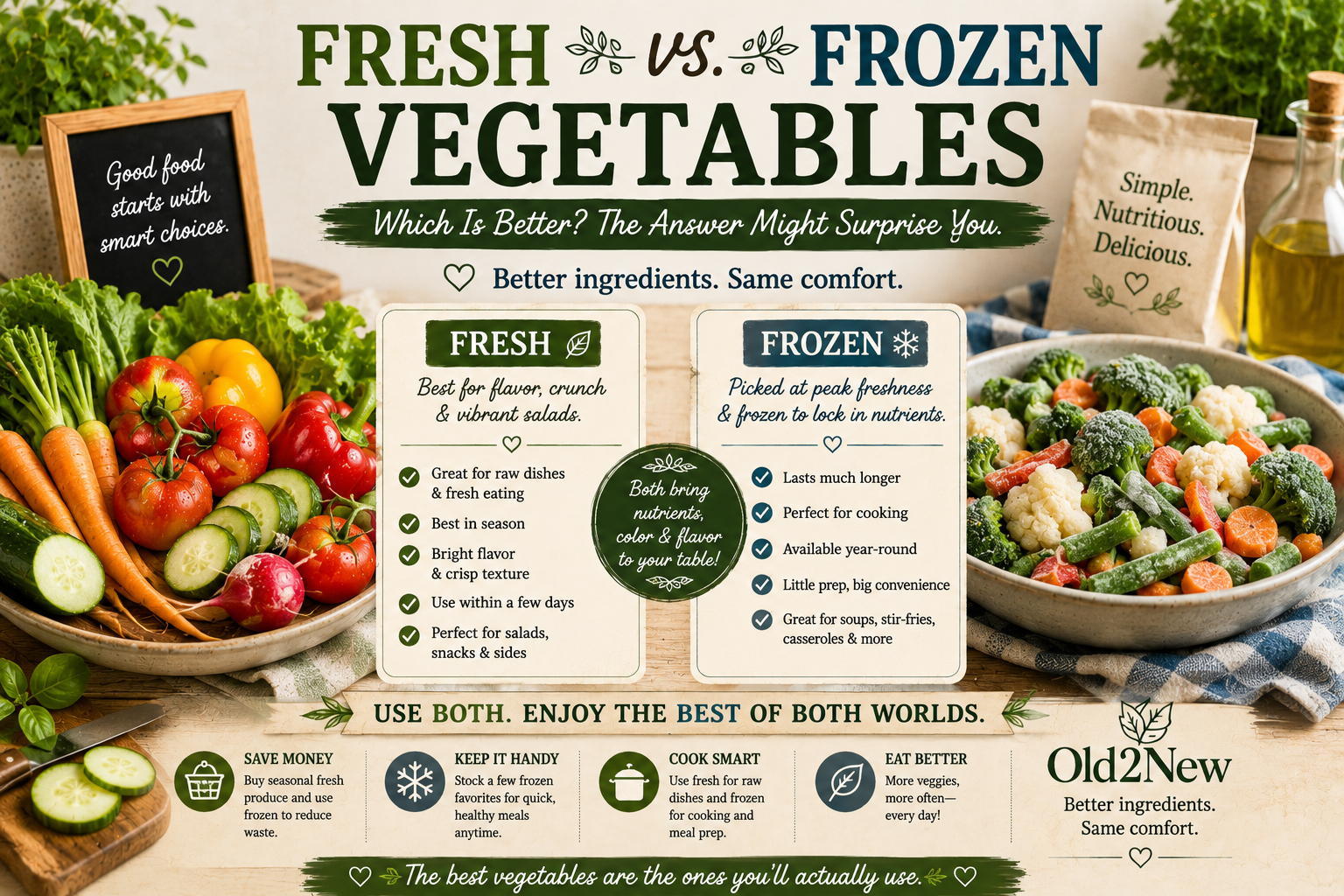
Swap Some Fresh Produce for Frozen
Buying everything fresh can become expensive — particularly for produce that's out of season and has traveled from far away, and particularly for produce that doesn't always get used before it spoils. Frozen vegetables eliminate the spoilage cost entirely: use exactly what you need, return the rest to the freezer, no waste.
For cooked applications — soups, casseroles, stir fries, pasta dishes, grain bowls, and omelets — frozen vegetables are functionally identical to fresh in the finished dish and often cost less. A bag of frozen broccoli, spinach, mixed vegetables, peas, and cauliflower in the freezer means there's always something available for a vegetable addition to any dinner without a special shopping trip.
The swap isn't about replacing all fresh produce with frozen. It's about using fresh produce for the applications where freshness matters — salads, snacking, raw dishes, peak-season cooking — and using frozen for the cooked applications where the quality difference is minimal. Buying both strategically produces the best combination of cost, quality, and zero waste.
Swap Pre-Cut Vegetables for Whole Vegetables
Pre-cut onions, peppers, broccoli, cauliflower, butternut squash, and fruit consistently cost more than the same vegetables whole — sometimes significantly more. The price premium pays for labor that takes a few minutes to do yourself.
When time allows, buying whole vegetables and prepping them at home produces the same result at lower cost. The efficiency gain comes from batching the prep: cutting all the onions for the week at once while the cutting board is out and the knife is in hand, storing them in a container in the refrigerator, and having ready-to-use prep for multiple dinners from one 10-minute session.
The exception where pre-cut is genuinely worth the price: vegetables that require significant effort to process (butternut squash, beets) where the time savings are substantial, or situations where buying the whole vegetable means buying more than will be used.
Swap Some Meat for Beans or Lentils
The most impactful budget swap in most households is replacing part of the meat in a dish with beans or lentils. This isn't about removing meat from the diet — it's about stretching one package of ground turkey or beef into two meals' worth of food.
Ground turkey cooked for tacos with half the meat and half a can of black beans goes further, tastes essentially the same, and costs significantly less per serving. Chili made with a pound of ground beef and two cans of kidney beans feeds the same number of people as chili made with two pounds of ground beef — at half the protein cost. Lentils simmered into a pasta sauce alongside a smaller amount of ground meat produce a Bolognese that's heartier and more nutritious than the all-meat version.
The meal stays recognizable. The portion sizes stay the same. The cost per serving drops significantly.
Swap Boneless Chicken Pieces for the Best-Priced Cut
Boneless, skinless chicken breast is the most expensive cut of chicken and not always the best choice for a given dish. Bone-in, skin-on chicken thighs are consistently less expensive, stay moist in the oven without effort, and produce better results in braises, slow cooker dishes, and sheet pan dinners where boneless breast would dry out.
Rather than automatically buying the same cut every week, comparing prices across chicken breast, thighs, tenderloins, whole chicken, and family packs and choosing the best value for the week's planned dishes produces meaningful savings. A family pack of chicken thighs is often dramatically less expensive per pound than the same weight in individually packaged boneless breast.
When a larger package represents better value, portioning and freezing the extra immediately turns the bulk purchase into a genuine saving rather than a waste risk.
Swap Specialty Grains for Everyday Staples
Farro, freekeh, and specialty grain blends are nutritious but not necessary for healthy, satisfying meals. Brown rice, oats, barley, whole wheat pasta, and potatoes deliver comparable fiber, complex carbohydrates, and nutritional value at a fraction of the price.
Quinoa occupies a middle ground — it's more expensive than rice but provides complete protein and cooks in 15 minutes, which makes it genuinely useful enough to justify the price for some households. For others, brown rice provides the same grain base at lower cost with a small supplementary protein source alongside.
The swap isn't about avoiding specialty grains entirely — it's about not assuming they're required for healthy cooking. The everyday staples that have fed families for generations are excellent choices, and they're often the ingredients that work best in the comfort food applications that appear most often on the dinner table.
Swap Bottled Sauces for Pantry Ingredients
Specialty sauces, dressings, and marinades are consistently marked up relative to what they actually contain — which is usually a combination of oil, acid, garlic, herbs, spices, and sweetener that can be assembled from pantry staples in two minutes.
A bottle of Italian dressing costs several dollars and contains olive oil, vinegar, garlic, Italian herbs, salt, and sugar — all of which are already in the pantry. A jar of teriyaki sauce costs several dollars and contains soy sauce, honey, garlic, and ginger — all already there. A container of ranch dressing contains Greek yogurt or buttermilk, garlic powder, onion powder, dill, and parsley — all already there.
Making dressings, marinades, and sauces from pantry staples costs almost nothing per batch, produces a fresher result than bottled versions, and eliminates the specialized product that sits in the refrigerator between uses. The pantry ingredients it's made from serve dozens of other purposes; the bottled sauce serves one.
Swap Single-Use Ingredients for Versatile Ones
An ingredient bought for one specific recipe often ends up partially used and then forgotten. The most valuable grocery purchases are the ingredients that contribute to multiple different meals throughout the week.
Greek yogurt is the clearest example: it's breakfast (with fruit and granola), a taco topping (in place of sour cream), the base of a creamy dressing or dip, a baked potato topping, a cream substitute in pasta sauce, and an addition to baked goods that adds protein and moisture. One container contributes to multiple meals across the week.
Spinach similarly appears in omelets, pasta sauce, soup, salads, sandwiches, and smoothies throughout the week from one bag. Lemons provide juice for dressings, marinades, pasta, soup, fish, and chicken, and zest for baked goods. Garlic goes into essentially everything savory.
The question before any purchase — "how many ways will I use this?" — distinguishes the ingredients that earn their place in the kitchen from the ones that sit unused.
Swap Convenience Snacks for Simple Ingredients
Individually packaged snacks are among the highest-cost per calorie items in the grocery store — you're paying for individual packaging, portion control, and convenience. Most of the same snack options can be assembled from ingredients already bought for meals at a fraction of the cost.
Apples with peanut butter. Greek yogurt with frozen berries. Popcorn from kernels. Homemade trail mix from bulk nuts, seeds, and dried fruit. Carrot sticks with hummus from a larger container. Hard-boiled eggs. Oat energy bites made from oats, almond butter, and honey.
All of these use ingredients already in the kitchen for other purposes, cost significantly less per serving than packaged equivalents, and in most cases are more nutritious.
Buy Ingredients That Become Multiple Dinners
The most powerful shift in grocery shopping thinking is moving from "ingredients for this recipe" to "ingredients that work together across multiple meals." The same collection of chicken, rice, broccoli, bell peppers, black beans, and canned tomatoes becomes roasted chicken with vegetables on Monday, chicken rice bowls on Tuesday, black bean tacos on Wednesday, and vegetable fried rice on Thursday — four different dinners from one shopping trip, with minimal overlap in how they taste.
This approach produces more meals per dollar than recipe-by-recipe shopping, reduces the number of specialty items purchased for single uses, and creates a natural cook-once framework where components from one dinner contribute to the next.
Use Your Freezer as a Money-Saving Tool
The freezer converts food that would otherwise be wasted into food that's available for future meals. Bread that won't be finished before it goes stale goes into the freezer and defrosts in the toaster. Extra cooked rice portions freeze and reheat in two minutes. Ground meat bought in bulk divides into dinner-sized portions and freezes until needed. Leftover soup, chili, pasta sauce, and cooked beans freeze in portions that become future dinners.
Every item that goes into the freezer rather than the trash represents money recovered from what would otherwise be waste — and creates a reserve of ready-to-use components for future meals that were already paid for.
FAQ
How much can I realistically save with these swaps? The savings vary by household size and current shopping habits, but the combination of reducing food waste, choosing store brands for pantry staples, buying bulk where appropriate, and stretching meat with beans typically reduces weekly grocery spending by 15 to 25 percent for most households without any reduction in the quality or quantity of food. The largest single savings usually come from reducing food waste and switching from individual packaged convenience items to bulk ingredients.
Is it worth buying store brand products? For most pantry staples — rice, oats, pasta, canned beans, canned tomatoes, frozen vegetables, baking ingredients, and spices — store brand quality is indistinguishable from name brand in finished dishes. The processing, ingredients, and nutritional content are typically the same. The categories where a specific brand might justify a premium are those where flavor has a significant impact on the dish — olive oil and canned tomatoes being the most notable examples.
How do I avoid buying in bulk and wasting food? Before any bulk purchase, identify specifically how the extra quantity will be used or stored. Bulk pantry staples (rice, oats, pasta, dried beans) that store for a year or more are almost always good bulk purchases. Bulk perishables (fresh produce, dairy) are only good bulk purchases if the extra can be frozen or if there's a specific plan for using all of it within the usable window. When uncertain, the smaller package is the more economical choice.
Continue Your Recipe Transformation Journey
Smart grocery shopping makes every other aspect of healthy cooking more sustainable and more affordable. These guides will help you build on it:
- Healthy Grocery Shopping on a Budget — the complete guide to budget-conscious grocery shopping
- Fresh vs. Frozen Vegetables — when to choose each and why
- Pantry Staples Every Home Cook Should Keep — the versatile ingredients worth always having
- How to Cook Once and Eat Twice — how to get multiple meals from every purchase
- Stop Throwing Away Food — how reducing waste extends every grocery dollar
Old2New — There is good in everything.