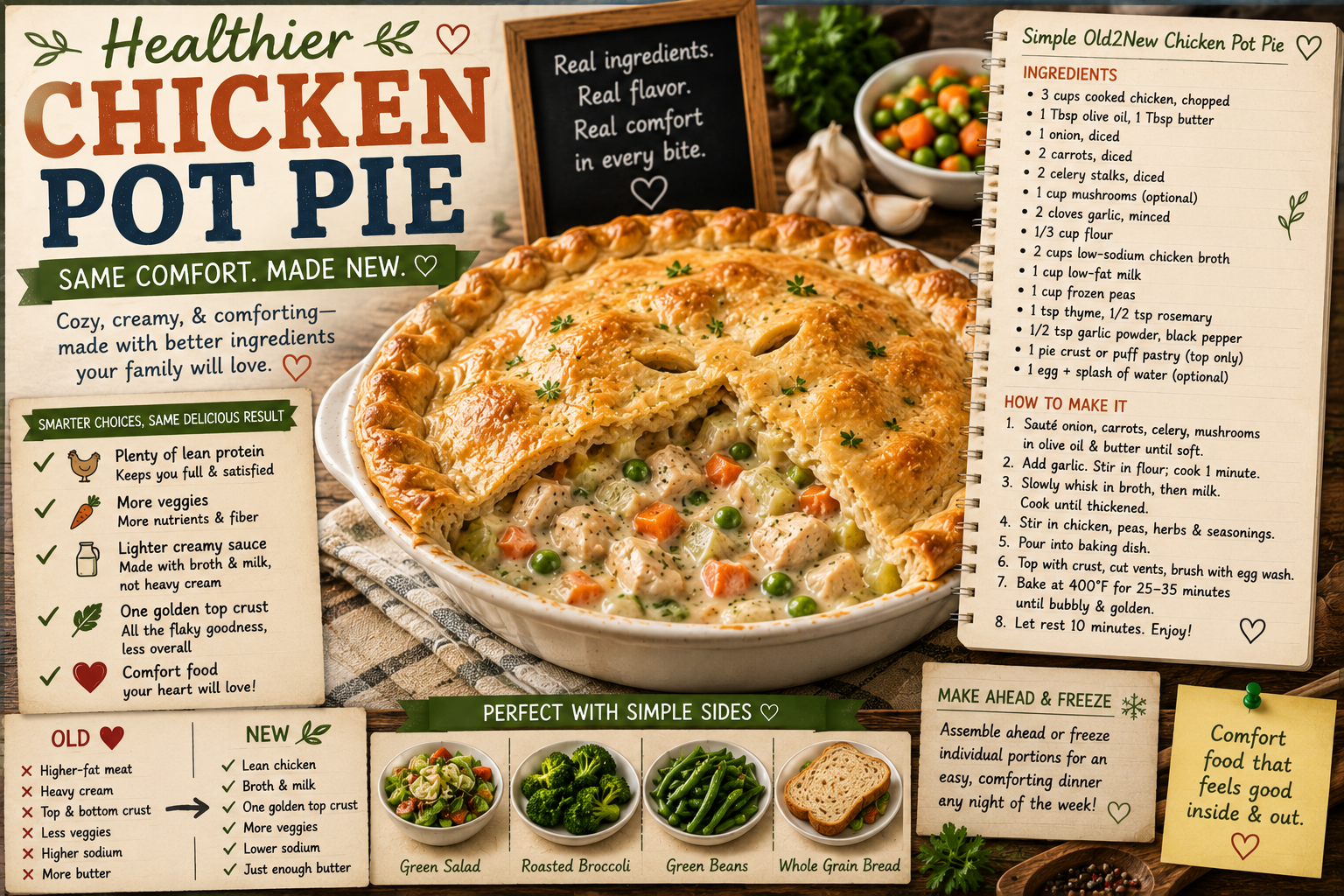
Healthier Chicken Pot Pie: Creamy, Cozy Comfort Made New
Few dinners feel as cozy as chicken pot pie. Break through that golden crust and underneath you'll find tender chicken, vegetables, and a warm, creamy sauce that fills the kitchen with the smell of herbs and roasted things. It's the kind of meal that feels especially good when the weather turns cold or when a long day has produced a specific hunger for something genuinely comforting.
Chicken pot pie can also become very heavy — lots of butter, heavy cream, a rich crust on both the top and the bottom, and sometimes fewer vegetables than the impression of the dish would suggest. The version most people grew up eating was designed for maximum richness rather than nutritional balance.
Are we removing the crust? No. We're making chicken pot pie. The crust stays.
What we're doing is looking at the filling layer by layer and finding where better ingredients can do more work — so the result on the table is still golden-crusted, still creamy underneath, still the specific thing people want when they want pot pie.
Start with Plenty of Chicken
Chicken pot pie already provides an excellent protein foundation — the problem is usually that the chicken-to-sauce ratio is inverted from what it should be, with mostly creamy sauce punctuated by occasional pieces of chicken rather than a filling where chicken is present in nearly every bite.
The goal is a filling where chicken is a primary component rather than a supporting player. Three cups of cooked, chopped chicken for a standard 9-inch pot pie ensures meaningful protein in each serving. Boneless skinless chicken breast or thighs both work — breast is leaner and more distinctly chicken-flavored, thighs are more forgiving and stay juicier through the baking time.
Using already-cooked chicken is both the most practical and the highest-quality approach for this dish. Leftover roasted chicken from earlier in the week, batch-cooked chicken from Sunday, or a rotisserie chicken from the grocery store all produce a filling where the chicken has already developed flavor before it joins the other components. Pot pie is an ideal second use for cooked chicken — the flavor holds through the oven time and the texture doesn't suffer from being cooked twice because the first cooking hasn't dried it out.
Let the Vegetables Take Up Space
Classic pot pie vegetables — carrots, peas, onion, celery — are already good. They provide color, texture, and flavor in proportions that feel right in a pot pie. The adjustment worth making isn't replacing them but allowing them to occupy more of the filling rather than being minor accents in a primarily sauce-and-chicken dish.
Doubling the traditional vegetables produces a filling where every spoonful has something to offer beyond sauce. Adding mushrooms is particularly worthwhile — cooked down until their moisture has released and concentrated, they add a savory depth that makes the filling taste richer without requiring more butter or cream. Corn adds sweetness and a satisfying bite. Broccoli florets cut small add color and vegetable volume. Green beans trimmed to bite size add texture variety.
The practical limit is that pot pie is not vegetable stew in a pastry shell — the sauce and chicken should remain the primary experience with vegetables as meaningful supporting elements. Adding one or two vegetables beyond the classics, prepared well and included in generous quantity, produces a filling that's more interesting and more nutritious without tipping into something that isn't recognizable as pot pie.
Make a Creamy Sauce Without Heavy Cream
The sauce is the component where the most meaningful nutritional improvement happens with the least change to the eating experience. Traditional pot pie filling may call for half a cup or more of heavy cream alongside generous butter — which produces the richness the dish is known for but also a significant fat content that isn't structurally necessary to the sauce's function.
A roux-based sauce — a small amount of butter (one tablespoon) and olive oil combined with flour, then built up with low-sodium chicken broth and low-fat milk — produces a sauce that's genuinely creamy, properly thickened, and deeply flavored without the heavy cream. The butter contributes flavor; the olive oil extends it without adding more butter; the flour provides the structure that thickens the sauce; the broth provides savory depth; the milk provides creaminess.
The technique matters: the flour must be cooked in the fat for at least a minute before the liquid is added, which removes the raw flour taste and develops a slightly nutty depth. The liquid should be added slowly while whisking continuously, which prevents lumps and creates a smooth sauce that thickens evenly. Once the sauce is smooth and thickening, the chicken, vegetables, and herbs join it — at which point any minor difference from a cream-based sauce becomes completely undetectable.
A Small Amount of Butter Is Fine
Butter tastes good. That's why people use it and why recipes that eliminate it entirely often produce disappointing results. One tablespoon of butter in a pot pie filling that serves six provides flavor contribution per serving that's modest and worthwhile. The goal isn't eliminating butter from the recipe — it's using an amount that does the flavor work without doing the entire moisture and fat work.
This is central to the Old2New approach: looking at what each ingredient contributes and adjusting the amount rather than automatically removing anything that's rich or calorie-dense. A small amount of butter doing meaningful flavor work is better than no butter and a sauce that tastes flat.
Season the Filling Well
A pot pie filling that tastes like chicken in milk is a failed filling regardless of its nutritional profile. The filling needs seasoning to taste like the comforting, deeply flavored dish that makes pot pie worth the effort of making.
Dried thyme is the defining herb of chicken pot pie — it has an earthy, slightly floral quality that pairs naturally with chicken and cream in a way that few other herbs replicate. Rosemary adds a woody, slightly piney note. Dried parsley adds freshness. Garlic — either fresh or powder — is essential. Black pepper generously. Celery provides an aromatic quality through the cooking process that contributes to the savory depth of the sauce.
A teaspoon of Dijon mustard stirred into the filling before the crust goes on adds a complex, slightly sharp note that makes the sauce taste more developed and interesting without producing any identifiable mustard flavor. This is a technique borrowed from classic French cooking where mustard is used as a flavor amplifier rather than a primary flavor — it makes the chicken taste more chickeny and the herbs taste more herby without tasting like mustard.
Tasting and adjusting before the crust goes on is essential. The sauce inside the finished pot pie tastes like the sauce that went in, so seasoning it correctly before baking produces a filling that's deeply satisfying rather than something that needed more salt after the fact.
The Crust Options
The crust is staying. The question is how much crust and what kind.
Top crust only is the most straightforward adjustment and the one that changes the dish the least: all the flakiness and golden pastry of the familiar experience, in half the quantity. A single top crust per serving compared to a top and bottom crust reduces the pastry contribution significantly while leaving the experience that defines pot pie intact. This is the simplest and most acceptable adjustment for households where the crust is the beloved part of the dish.
Puff pastry produces a showstopping result with a single layer of golden, flaky pastry that rises dramatically in the oven and looks considerably more impressive than a standard pie crust. It also tends to be thinner than a standard pie crust, contributing less total pastry per serving while delivering more visual drama. Cutting small vents before baking allows the steam from the filling to escape rather than soaking the pastry from underneath.
Individual pot pies in ramekins or small baking dishes allow each person to have their own golden crust, make portioning natural, and produce a presentation that feels special rather than reduced. They also allow customization — one ramekin with mushrooms, one without; one with extra vegetables, one with more chicken — which is practical for households with varying preferences.
What's not necessary: replacing the crust with mashed cauliflower (which is a shepherd's pie, not a pot pie, and a different excellent dish), or removing the crust entirely (which produces creamy chicken stew, also good, also not pot pie). If pot pie is what's wanted, pot pie is what should be made.
A Simple Old2New Chicken Pot Pie
Ingredients (serves 6)
- 3 cups cooked chicken, chopped (breast or thigh)
- 1 tbsp olive oil
- 1 tbsp butter
- 1 medium onion, diced
- 2 carrots, diced
- 2 celery stalks, diced
- 1 cup mushrooms, sliced or quartered (optional)
- 2 cloves garlic, minced
- ⅓ cup all-purpose or whole wheat flour
- 2 cups low-sodium chicken broth
- 1 cup low-fat milk
- 1 cup frozen peas
- 1 tsp dried thyme
- ½ tsp rosemary
- ½ tsp garlic powder
- 1 tsp Dijon mustard
- Black pepper to taste
- Fresh parsley, chopped (optional)
- 1 prepared pie crust or sheet of puff pastry (for top only)
- 1 egg beaten with a splash of water for egg wash (optional)
Instructions
Preheat oven to 400°F.
Heat olive oil and butter together in a large skillet or Dutch oven over medium heat. Add onion, carrots, celery, and mushrooms if using. Cook until vegetables soften, about eight minutes. Add garlic and cook one minute until fragrant.
Sprinkle flour over the vegetables and stir to coat evenly. Cook one minute to eliminate the raw flour taste. Slowly pour in the chicken broth while whisking continuously to prevent lumps. Add the milk and continue cooking, stirring regularly, until the sauce thickens to a creamy consistency, about five minutes.
Stir in the chicken, peas, thyme, rosemary, garlic powder, Dijon, black pepper, and parsley. Taste and adjust seasoning. The filling should be creamy and well-seasoned — it will thicken further as it bakes.
Transfer the filling to a baking dish or individual ramekins. Place the pie crust or puff pastry over the top, trim or fold the edges, and cut small vents for steam to escape. Brush with egg wash if desired.
Bake 25 to 35 minutes until the crust is deeply golden and the filling is bubbling at the edges. Rest 10 minutes before serving — the filling temperature immediately from the oven is extreme enough to be unpleasant.
Using Leftover Chicken
Chicken pot pie is an ideal destination for leftover roasted chicken, batch-cooked chicken, or the last portions of a rotisserie chicken. The chicken that went into the pot pie has already developed flavor from its initial cooking, and that flavor transfers to the filling during the baking process. The result is often better than a pot pie made with freshly cooked chicken because the complexity of the cooked chicken contributes to the depth of the filling.
The filling can also be prepared ahead — made completely, cooled, covered and refrigerated for up to 24 hours — with the pastry added and baking done when dinner time arrives. This makes chicken pot pie a realistic weeknight dinner rather than a weekend project, particularly when the chicken is already cooked.
Make It Your Family's Version
Some families put potatoes in chicken pot pie. Others add corn. Some use only peas and carrots because that's the version everyone knows and loves. Some households have one person with a strong position on mushrooms that cannot be negotiated.
The recipe should accommodate all of these realities rather than requiring everyone to eat the same version. The filling is forgiving of substitutions and additions: potatoes diced small and cooked with the vegetables, corn stirred in with the peas, any combination of vegetables that reflects what the household actually wants. Individual ramekins make customization practical — different fillings for different preferences, unified by the same golden crust.
FAQ
Can I use store-bought pie crust? Yes — refrigerated store-bought pie crust works perfectly for this recipe and is one of the most reasonable convenience shortcuts available. The filling is homemade; the crust being store-bought doesn't compromise the dish's essential character. If the goal is putting a complete, good-quality pot pie on the table with reasonable effort, store-bought crust is a legitimate tool.
How do I prevent the bottom from being soggy if I use a bottom crust? Pre-baking (blind baking) the bottom crust for 10 minutes before adding the filling helps, as does making sure the filling isn't too loose when it goes in. The top-crust-only approach eliminates the issue entirely — which is one of the practical advantages of using only a top crust alongside the nutritional one.
Can the filling be frozen? The filling (without the crust) freezes well for up to three months. Cool completely before freezing in appropriate containers. When ready to use, thaw overnight in the refrigerator, add the pastry top, and bake as directed. The pastry itself doesn't freeze and bake as well as the filling alone, which is why freezing filling separately and adding fresh pastry at baking time produces the best result.
Continue Your Recipe Transformation Journey
Chicken pot pie is one of the most satisfying comfort food transformations because the improvements are in the filling, where they're invisible in the finished dish. These guides will help you build on it:
- How to Make Creamy Recipes Without Heavy Cream — the full guide to making creamy sauces without heavy cream
- What Can I Make with Chicken? — the complete guide to using chicken across many applications
- Easy Ways to Add More Vegetables Without Anyone Noticing — how to load the filling with vegetables seamlessly
- How to Cook Once and Eat Twice — how batch-cooked chicken makes pot pie a weeknight meal
- How to Freeze Meals Successfully — how to freeze pot pie filling for future dinners
Old2New — There is good in everything.