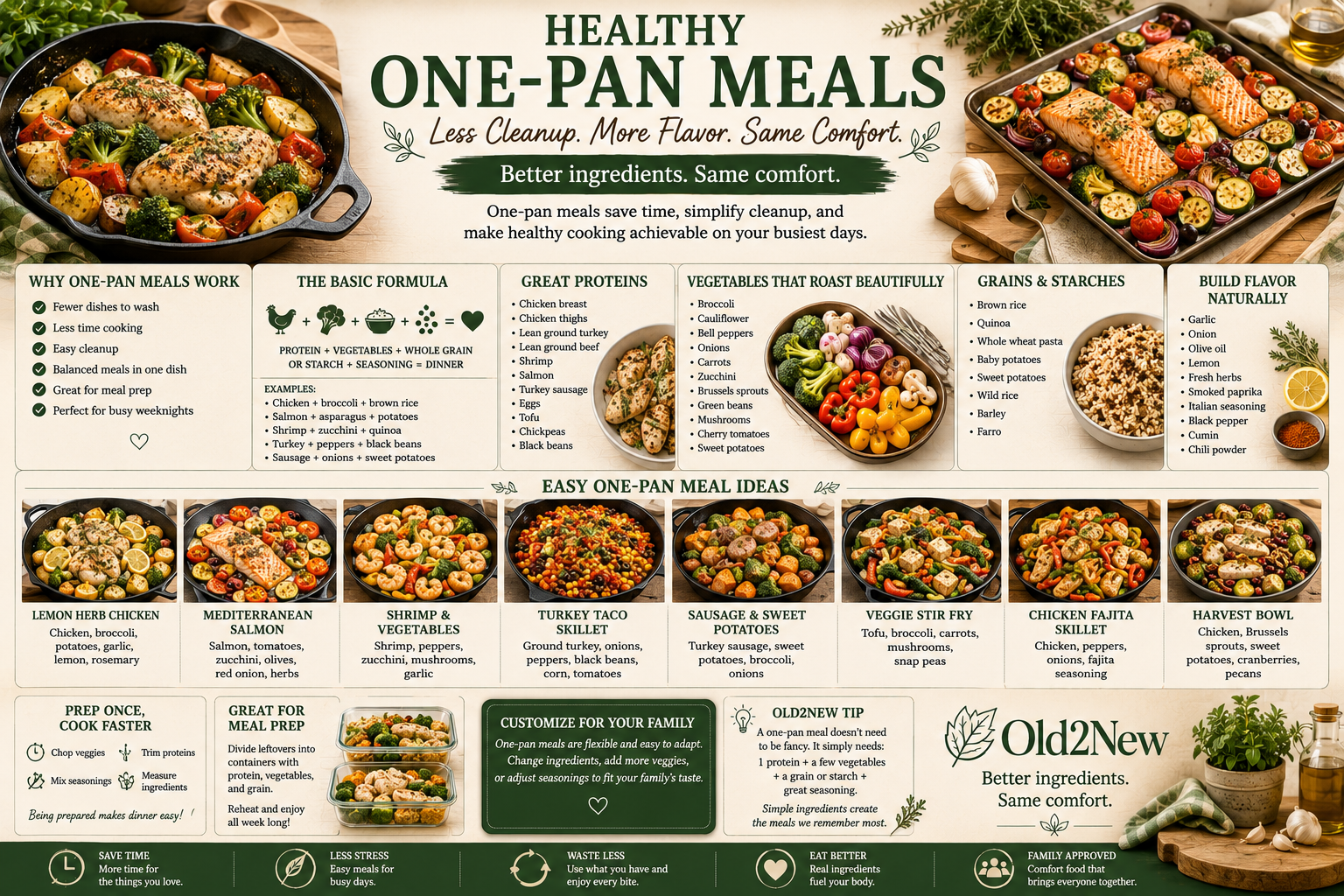
Healthy One-Pan Meals
The best weeknight dinners aren't the ones that require the most technique or the most ingredients. They're the ones that come together reliably, taste genuinely good, and don't leave you facing a sink full of dishes at 8pm. One-pan meals deliver all three.
The appeal is practical: everything goes into one skillet, one baking dish, or one sheet pan, cooks together while you're doing something else, and produces a complete dinner with protein, vegetables, and often a starch — all in one vessel. The cleanup is minimal because there's only one thing to wash. The flavor is often better than it would be if the components were cooked separately, because everything cooks together and the juices and seasonings distribute across the entire dish.
It's also one of the most adaptable formats for making comfort food work with better ingredients — because the one-pan format is inherently flexible, it's easy to use leaner proteins, load up on vegetables, and choose whole grain starches without it feeling like a sacrifice.
Why One-Pan Meals Work
Cooking everything together in one vessel means the flavors from each component influence everything else. Chicken thighs roasting over vegetables drip their juices onto the vegetables below, seasoning and basting them throughout the cooking time. Shrimp cooked with garlic, butter, and lemon in a skillet transfers those flavors to the zucchini and peppers cooking alongside it. A one-pan pasta dish where the pasta cooks directly in the broth with the protein and vegetables absorbs all the surrounding flavors into every strand.
The efficiency compounds: fewer dishes to wash means less time after dinner. Everything finishing at the same time means no coordinating multiple pots and timers. Having one pan to monitor means less attention required during cooking. And the format is naturally portion-friendly — what's in the pan is dinner, which reduces the tendency to keep adding food because it's easy to access.
The Basic Formula
Almost every successful one-pan meal follows the same framework: one protein, a selection of vegetables, a starch or grain (optional but often included), and a seasoning that ties everything together. The specific ingredients within each category are interchangeable — which is what makes the format so versatile.
Protein plus vegetables plus starch plus seasoning equals dinner. Chicken thighs, broccoli, baby potatoes, garlic, rosemary, and olive oil — dinner. Salmon, asparagus, cherry tomatoes, lemon, and herbs — dinner. Shrimp, zucchini, bell pepper, mushrooms, garlic, and chili flakes — dinner. Ground turkey, onion, black beans, corn, tomatoes, and taco seasoning in a skillet — dinner.
Once the formula is internalized, the specific meal becomes a function of what's available rather than what recipe is being followed. The formula works with whatever protein is in the refrigerator, whatever vegetables need to be used, and whatever seasoning direction sounds appealing that night.
Great Proteins for One-Pan Meals
The best proteins for one-pan cooking are the ones that cook at approximately the same rate as the vegetables they're paired with, or that can be added at different times to account for the timing difference.
Chicken thighs are the most forgiving one-pan protein — they have enough fat content to stay moist through longer cooking times and don't dry out if they spend a few extra minutes in the oven. They work in any flavor direction and pair with every vegetable. Chicken breast cooks faster and benefits from being pounded to even thickness or sliced for skillet applications where cooking time is shorter. Ground turkey or lean ground beef works in skillet applications where it's browned first and then the vegetables are added. Shrimp cook in three to four minutes which makes them ideal for finishing a pan — add them last so they don't overcook. Salmon roasts beautifully alongside vegetables at 400°F and stays moist within its natural fat content. Turkey or chicken sausage adds flavor from the casing and fat that seasons everything in the pan without requiring separate seasoning.
For plant-based one-pan meals, chickpeas and black beans are the most practical — they're already cooked and add protein and fiber without requiring any additional cooking time. Tofu benefits from pressing out excess moisture and being added to a hot pan where it can brown rather than steam.
Vegetables That Work Best
The most successful one-pan vegetable combinations include vegetables with similar roasting or cooking times — or that can be added at different stages so everything finishes together.
Root vegetables and starches (potatoes, sweet potatoes, carrots, beets) take the longest and should go into the oven or pan first. Broccoli, cauliflower, and Brussels sprouts take a moderate amount of time and develop the most flavor when roasted at high heat. Bell peppers, onions, zucchini, and mushrooms cook relatively quickly and are ideal for skillet applications or as additions to the pan partway through roasting. Cherry tomatoes, spinach, and green beans are the fastest and should go in last — cherry tomatoes burst and release their juice, spinach wilts in minutes, and green beans cook quickly at high heat.
A colorful pan almost always indicates a flavorful one — mixing multiple vegetable colors means multiple flavor profiles and multiple nutritional profiles in one dish. The visual variety also makes the finished meal more appealing.
Easy One-Pan Meal Ideas
Lemon Herb Chicken — Bone-in chicken thighs, baby potatoes, and broccoli tossed with olive oil, garlic, lemon zest and juice, and fresh rosemary, roasted together at 425°F for 40 minutes. The potatoes cook under the chicken and absorb the drippings. The broccoli goes in for the last 20 minutes so it crisps rather than overcooks. Everything finishes together with minimal intervention.
Mediterranean Salmon — Salmon fillets placed over a bed of cherry tomatoes, sliced zucchini, olives, and red onion tossed with olive oil, garlic, and fresh herbs, baked at 400°F for 15 minutes. The tomatoes burst and create a sauce that pools around the salmon. A complete dinner that looks like it required far more effort than it did.
Shrimp and Vegetable Skillet — Bell peppers, zucchini, and mushrooms sautéed in olive oil with garlic and Italian seasoning until tender, then shrimp added and cooked for three minutes until pink. Finished with lemon and fresh parsley. A dinner that comes together in 20 minutes with one pan.
Turkey Taco Skillet — Ground turkey browned with onion, garlic, and taco seasoning, then black beans, corn, and diced tomatoes added and simmered until everything is combined and the flavors have melded. Serve directly from the pan with Greek yogurt, avocado, and fresh cilantro. A taco night dinner that requires no separate taco assembly.
Sausage and Sweet Potatoes — Sliced turkey or chicken sausage with cubed sweet potatoes, broccoli, and onion tossed with olive oil, smoked paprika, and black pepper, roasted at 400°F for 30 minutes. Everything caramelizes together and the sausage flavors the whole pan.
Chicken Fajita Skillet — Sliced chicken breast, bell peppers, and onions cooked together in a cast iron skillet with fajita seasoning until the chicken is cooked through and the vegetables are slightly charred. Serve directly from the skillet with corn tortillas, avocado, and Greek yogurt. A weeknight fajita that skips the grill without losing the flavor.
Harvest Grain Bowl Skillet — Chicken, Brussels sprouts, sweet potatoes, and red onion roasted together until caramelized, then plated over cooked farro or quinoa and finished with dried cranberries, toasted pecans, and a honey-Dijon dressing. A fall-inspired skillet that works as a complete dinner and reheats beautifully for lunch.
Veggie Stir Fry — Broccoli, carrots, mushrooms, snap peas, and bell pepper cooked in a very hot pan with garlic, ginger, and a sauce of low-sodium soy sauce, sesame oil, and a little honey. Served over brown rice or quinoa. A meatless dinner that comes together in 15 minutes and satisfies completely.
Build Flavor Naturally
One-pan meals don't need complicated sauces to taste good — the combination of heat, time, and a few well-chosen seasonings does most of the work. The key is building flavor at every stage rather than adding everything at the end.
Start by seasoning the protein well before it goes into the pan or oven. This gives the seasoning time to penetrate and creates a better crust or sear. Add aromatics — garlic, onion, fresh herbs — that will flavor the entire dish as they cook. Use enough olive oil that the vegetables roast rather than steam. Finish with something bright — a squeeze of lemon, a splash of vinegar, fresh herbs torn over the top — that lifts everything and makes the dish feel complete.
Smoked paprika is particularly useful in one-pan cooking because it adds a depth that suggests slow cooking even in fast preparations. Italian seasoning covers multiple herb notes in one addition. Garlic powder distributed through a seasoning blend coats every surface in a way that fresh garlic alone doesn't. Lemon zest added to a seasoning rub before cooking infuses the protein with citrus flavor throughout rather than just on the surface.
Great for Meal Prep
One-pan meals scale easily for meal prep — the same sheet pan or skillet dinner that feeds four at dinner can be portioned into individual containers for four lunches throughout the week. The protein, vegetables, and grain that cooked together as dinner divide into complete, balanced lunches that reheat quickly and hold well for four days.
For meal prep specifically, one-pan dishes with more separated components — a grain underneath, protein on one side, roasted vegetables on the other — reheat with better texture than dishes where everything is combined in a sauce. The sauce-based one-pan meals (skillet dinners, stir fries) are best eaten within two to three days; the roasted sheet pan meals hold well for four.
Customize for Your Family
The one-pan format is one of the most family-friendly because it's naturally customizable at the pan level. If someone doesn't like mushrooms, they can be added to one side of the sheet pan and not the other. If someone wants more protein, an extra piece of chicken goes in alongside the others. If someone wants less heat, the seasoning can be adjusted before the protein goes in.
The format also adapts naturally to different dietary preferences in the same household — a sheet pan with chicken on one side and chickpeas on the other, with shared vegetables and seasoning, feeds meat-eaters and plant-based eaters from the same pan.
FAQ
How do I keep everything from finishing at different times? The key is starting the slowest-cooking items first and adding faster-cooking items partway through. In a sheet pan dinner, root vegetables and potatoes go in first because they take the longest. Broccoli and cauliflower go in 10 to 15 minutes later. Cherry tomatoes and green beans go in for the last 10 minutes. Shrimp goes in for the final 5 minutes. Staggering additions by cooking time means everything finishes together.
What's the best pan for one-pan meals? A large cast iron skillet (12 inch) is the most versatile for stovetop one-pan meals — it holds heat evenly, creates a good sear, and goes directly into the oven. A half-sheet pan (18x13 inch) is the best option for sheet pan dinners because it provides enough surface area for ingredients to spread without crowding, which is essential for roasting rather than steaming. A large Dutch oven or braising pan works best for braised one-pan dishes and soups.
Can I use one-pan meals for meal prep? Yes — one-pan meals are ideal for meal prep because the format naturally produces a complete, balanced meal (protein, vegetables, starch) in one cooking session. Portion directly into containers after cooking. Sheet pan roasted meals hold well for four days. Skillet meals with sauce hold for two to three days. Both reheat well in a microwave with a splash of water to prevent drying.
How do I prevent vegetables from becoming mushy? Don't crowd the pan. Moisture released by vegetables needs somewhere to go — in a crowded pan, it pools around the vegetables and steams them rather than allowing them to roast and develop color. Use a large enough pan that ingredients are in a single layer with space between pieces. High heat (400°F to 425°F) evaporates moisture quickly and promotes browning. Cutting vegetables into similar sizes ensures they cook at the same rate.
Continue Your Recipe Transformation Journey
One-pan meals are one of the most practical formats for making healthier cooking sustainable on a busy schedule. These guides will help you build on them:
- Healthy Cooking Methods That Still Taste Amazing — the techniques that make one-pan meals work
- How to Cook with Herbs and Spices — how to season one-pan meals for maximum flavor
- Pantry Staples Every Home Cook Should Keep — the ingredients that make any one-pan meal possible
- Beginner's Guide to Meal Planning — how to incorporate one-pan meals into a weekly plan
- How to Use Leftovers Creatively — what to do with one-pan meal leftovers
Old2New — There is good in everything.